ServicesHardscape Installation
Hardscape Installation in Daytona Beach
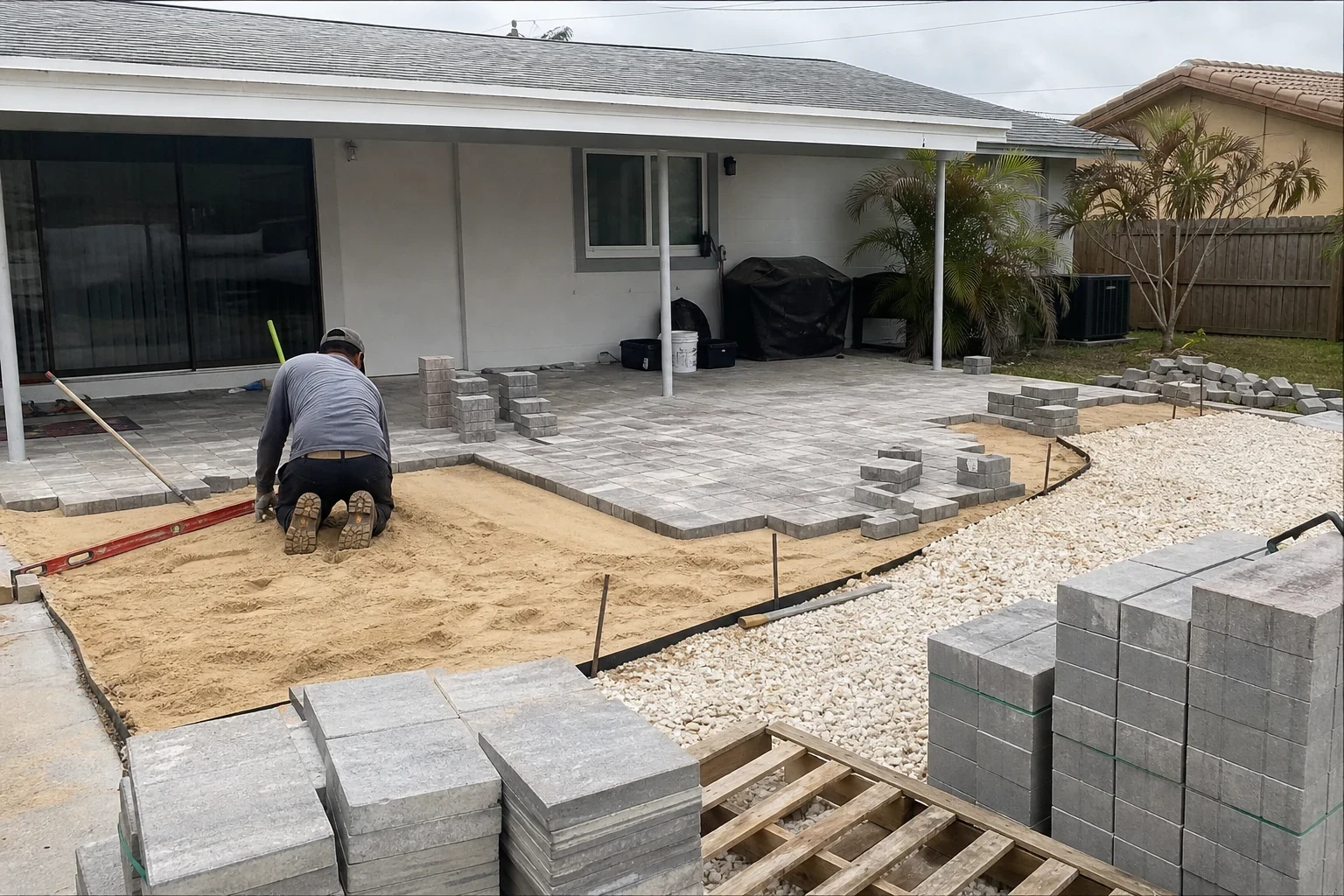
We build paver patios, walkways, garden walls and fire pit areas for your home. Most of the work you never see: the dug-out base, the compaction, the slope and the edging. That hidden layer decides whether your patio stays flat for years or starts to sink.
Outdoor space that stays level and drains right
Hardscape installation covers the solid parts of your yard: patios, walkways, steps, low retaining and seat walls, borders and fire pit pads. It is the right call when you want usable space that holds up to foot traffic, furniture and weather without the upkeep of grass.
Pavers rarely fail on the surface. They fail underneath, when the base is too thin, the soil was not compacted or the edge has nothing holding it in. Sandy soil like ours shifts easily when heavy summer rain runs under a patio, so we spend most of a job's labor on the parts that get buried. You end up with a surface that sheds water away from your home and keeps its lines.
What goes into a hardscape job with us
Excavation to the right depth
We dig out organic soil and roots down to firm ground, deeper for areas that will carry heavier loads. Leaving topsoil under a patio is the most common reason it settles.
Base laid and compacted in lifts
Crushed base goes in a few inches at a time, and each layer is wetted and run with a plate compactor before the next. Compacting it all at once leaves soft pockets at the bottom.
Fabric where the soil calls for it
On loose or sandy ground we lay geotextile fabric under the base. It keeps the stone from pushing down into the sand over time.
Built-in slope for drainage
Every patio and walkway is pitched so water runs away from your home and off the surface. You should not see puddles sitting on your pavers after a storm.
Edge restraint and joint sand
We anchor a rigid edge along every open side so the field cannot creep outward. Joints are filled with polymeric sand and set, which helps keep out weeds and ants.
Walls, steps and fire pit areas
Seat walls and low retaining walls get a compacted footing, a buried first course and gravel backfill behind them for drainage. Steps are sized for a comfortable, even rise.
Signs your yard could use hardscape work
- A patio that sinks or rocks
- Pavers that dip, wobble underfoot or sit at different heights point to a failing base. Resetting the top layer alone usually does not last, so we look at what is underneath first.
- Water pooling near the house
- If rain collects on your patio or flows toward your foundation, the slope is wrong. A rebuilt surface with proper pitch fixes that.
- Worn dirt paths across the lawn
- When everyone takes the same shortcut to the gate or the shed, the grass will not come back. A walkway puts a clean, dry surface where people already walk.
- Weeds growing up through joints
- Constant weeds and sand washing out of the joints mean the joint material is gone or was never set. Left alone, pavers start to loosen.
- No comfortable place to sit outside
- If your family heads back indoors because the backyard offers nothing but grass and sand, that counts as a sign too. A patio or fire pit area gives your home an outdoor spot you will reach for on cool evenings.
How your hardscape project runs
- 1
Walkthrough and free estimate
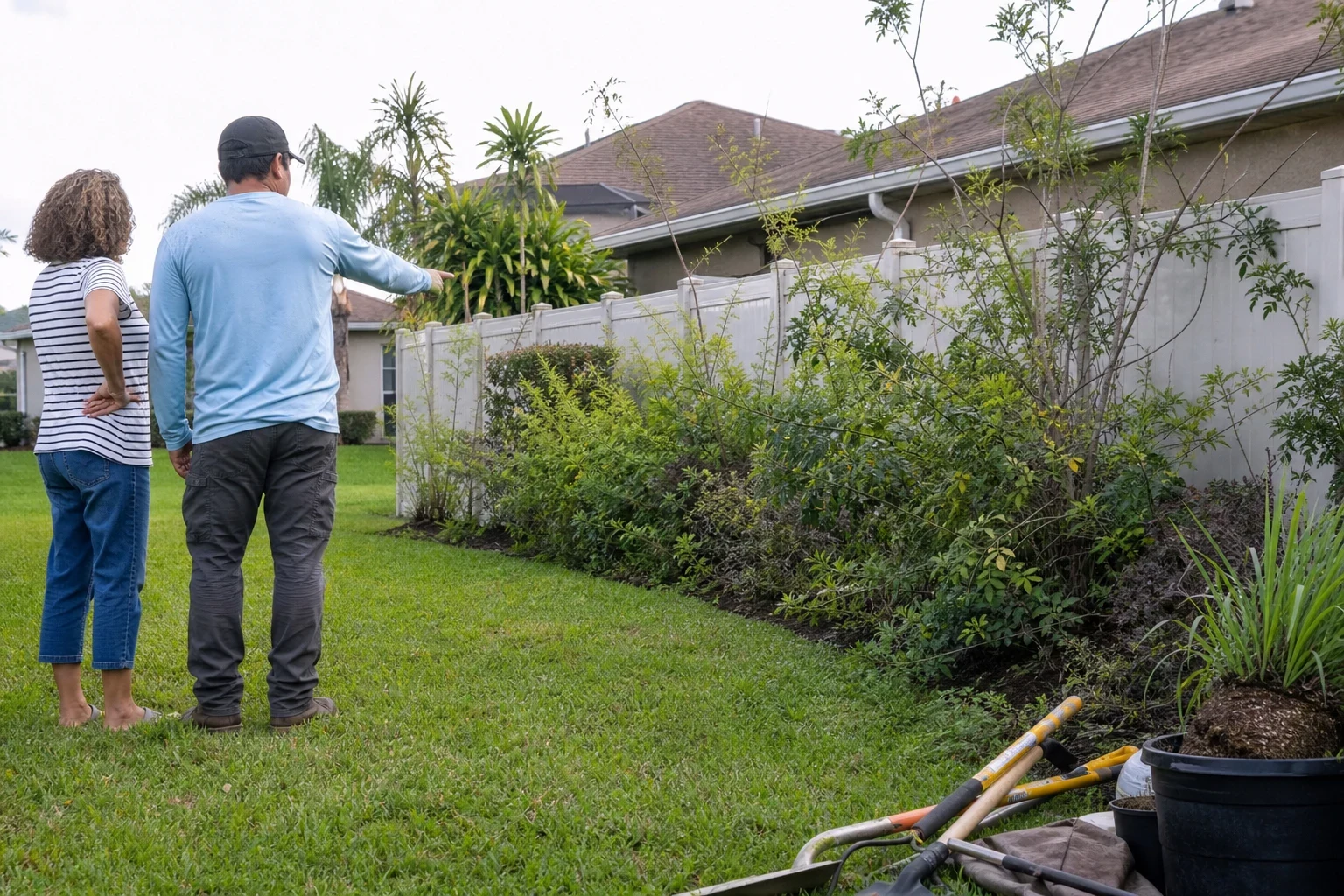
We come out, look at the space, check how water moves across the yard and talk about how you want to use it. You get a written estimate that lists the base, materials and edging, not just a single number.
- 2
Layout and materials
We mark the shape on the ground so you can see the size before anything is dug. You choose paver style and color, and we confirm whether the project needs a permit and handle it if so.
- 3
Dig, base and compaction
This is the longest part. We excavate, set fabric where needed, then build and compact the base in lifts while checking grade with a string line and level.
- 4
Laying, cutting and finishing
Pavers go down on a screeded bedding layer, borders are cut clean, edging is anchored and the joints are filled and set. We protect nearby beds and lawn during the work and clean up the cuttings and debris before we leave.
What affects the cost of hardscape installation
Every hardscape price starts with square footage, but the ground under it often matters just as much. We walk you through each line on the estimate so you know where the money goes. For a larger project, financing is available for amounts up to $100,000, with terms anywhere from 2 to 12 years and no penalty if you pay it off early.
- Footprint and layout
- Larger areas need more base and pavers. Curves and many angles add cutting time and waste compared to a simple rectangle.
- Soil and existing surfaces
- Removing an old concrete slab, roots or poor fill adds labor and hauling. Soft or wet ground may need deeper base or fabric.
- Material choice
- Concrete pavers, travertine and natural stone differ in cost and in how much cutting and handling they need.
- Access to the work area
- If equipment cannot reach the backyard, base and pavers move by wheelbarrow, which takes longer.
- Walls, steps and add-ons
- Seat walls, steps, fire pits and low-voltage lighting each add materials and build time beyond a flat patio.
Answers about patios, walkways and walls
- How many days will my new patio take to build?
- Once materials are delivered, most backyard patios are finished in a few working days. Projects with walls or steps run longer. Rain can pause compaction, since we will not lay pavers on a wet, soft base. We give you a realistic schedule at the estimate.
- Only one corner of my patio has dropped. Does the whole thing need to come out?
- Not always. When the low spot is contained, we pull up the pavers in that section, rebuild and compact the base underneath, then set them back in place. If we find the entire patio sits on a thin or uncompacted base, we will show you what we found and explain why a full rebuild is the longer-lasting choice.
- Why use polymeric sand in the joints?
- Polymeric sand hardens after it is wetted, so it resists washing out in heavy rain. It also helps keep weeds and ants from working their way up between pavers. It needs to be installed on a dry day and set properly to do its job.
- Will the work damage my lawn or garden beds?
- We plan equipment routes and protect beds and turf where we can. Some lawn near the dig area may get scuffed, and we leave the site cleaned up. If you want new grass along the edges afterward, our sod installation service can finish it.
- Do you design the layout too?
- Yes. We help with shape, size and paver choice during the walkthrough. For a full yard plan that ties hardscape in with plants and lighting, our landscape design service is a good starting point.
Ready for a patio that stays put
Share the space you picture using, and we will walk the ground it will sit on before we put a number on anything. The itemized estimate you get afterward costs you nothing.