ServicesPalm Tree Pruning and Removal
Palm Tree Pruning and Removal in Daytona Beach
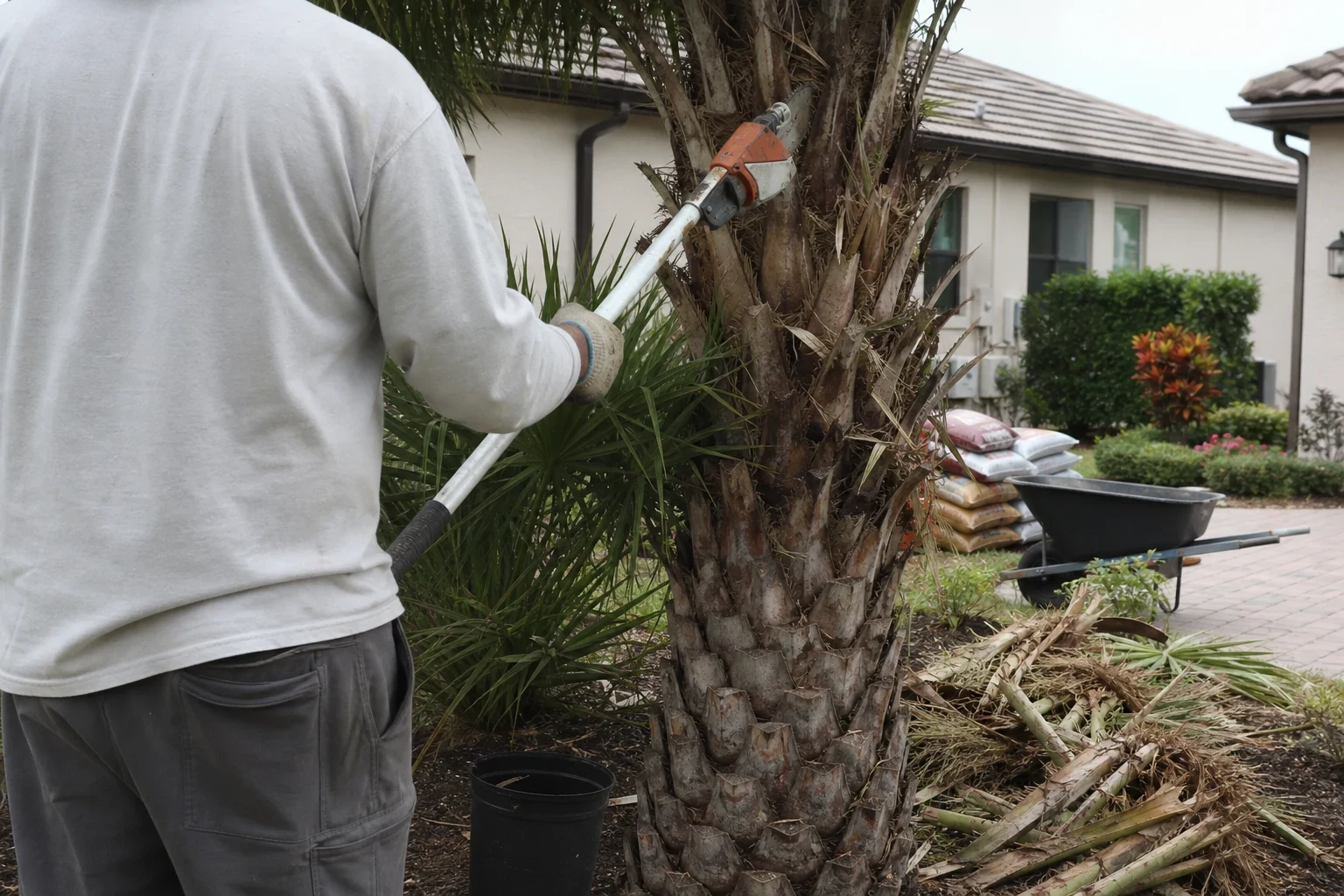
We prune palms the way they grow best: dead and hanging fronds off, healthy green crown left in place, clean cuts close to the trunk. If a palm is failing or tilting over the house, we lower it in controlled sections and clean up after.
Good palm care is mostly about what we leave on the tree
A palm has one growing point at the top of the trunk, and it can't heal a wound the way an oak can. Every cut and every gouge stays for life. That's why the details matter here more than almost anywhere else in your yard. We cut brown and broken fronds, seed pods and flower stalks, and we stop there. The green fronds are what feed the tree.
You'll see plenty of palms around town stripped to a few fronds pointing straight up. That look is called a hurricane cut, and it weakens the palm, slows its growth and can thin the trunk at the top over time. We'd rather leave a full, rounded crown that handles wind on its own.
Some palms are past saving. Disease, lightning, root damage or a slow decline can leave a tree that is a real risk to your roof, pool cage or driveway. In those cases we give you a straight answer and handle the removal from the first cut to the last rake.
What our palm work covers
Frond and seed pod removal
We take off dead, drooping and storm-torn fronds plus fruit clusters and flower stalks. Seed pods are heavy, messy and attract pests, so clearing them keeps patios and pool decks cleaner.
Cuts that protect the trunk
Fronds are cut a short distance from the trunk, never torn or flush-shaved. We don't climb healthy palms with spikes, because every spike hole is a permanent opening for rot and insects.
Clean tools between trees
Saws and blades get cleaned before we move from one palm to the next. Fungal diseases like Fusarium wilt spread through dirty pruning tools, and queen palms and Canary Island date palms are especially vulnerable.
Boot cleanup where it's ready
The old leaf bases on a trunk, often called boots, come off cleanly only when they're loose. We remove the ones that are ready and leave the rest so we don't scar the trunk.
Controlled palm removal
Tall or tight-quarters palms are taken down in sections and lowered with rigging instead of dropped. We protect your lawn, beds and hardscape on the way down.
Haul-away and cleanup
Fronds, trunk sections and pods leave with us. We rake and blow the area so you're not finding spines in the grass next week.
Signs a palm is due for a trim or a closer look
- Dead fronds draped below the crown
- Brown fronds hanging down the trunk are done feeding the tree. They trap debris, give rats a cozy nesting spot and can let go in a strong gust.
- Heavy seed pods or flower stalks
- Big clusters of dates or berries stain pavers and pool decks and pull on the crown. Taking them off before they ripen saves a lot of cleanup.
- Fronds over the roof or pool cage
- Palms near the house tend to drop fronds onto screens, shingles and the lanai roof. A trim before hurricane season keeps loose material from flying in the first big storm.
- Yellowing older fronds
- This is often a potassium shortage, not a pruning problem. Cutting those fronds off can make it worse, because the palm is still pulling nutrients from them, so we'll tell you when to leave them.
- A shrinking, pale or collapsing crown
- A spear leaf that pulls out easily, a crown that keeps getting smaller or a soft, conky growth near the base can point to rot or disease. These palms usually need to come down before they fall on their own.
- Leaning after a storm
- Palms flex in wind, but a new lean or soil heaving at the base means the roots may have let go. Have it looked at before the next blow.
How a palm job day runs
- 1
Walk the property together
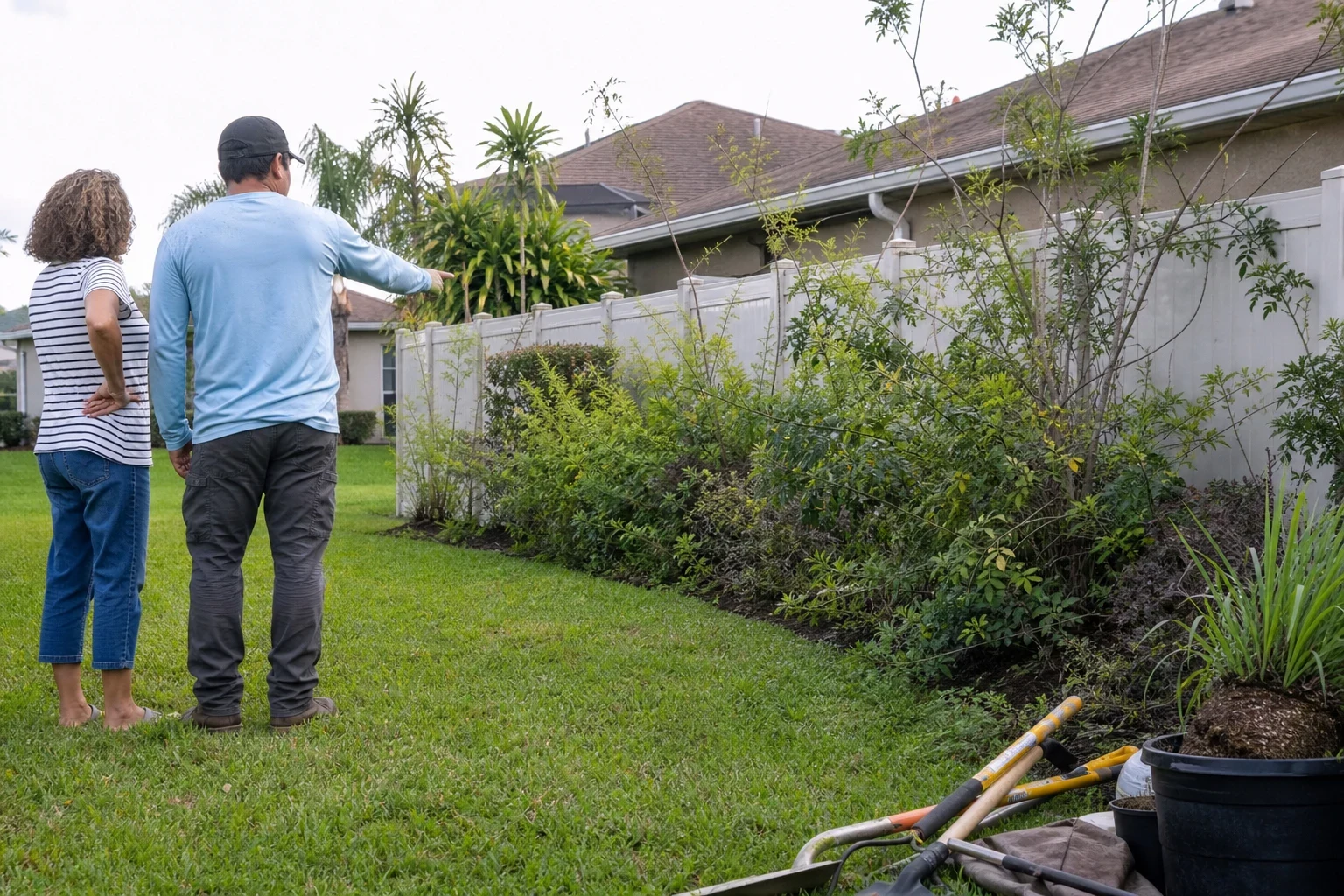
We look at each palm, the species, its health and what's underneath it. You get a clear answer on what needs trimming, what should be left alone and whether anything should come out.
- 2
Written estimate by tree
Your written estimate is broken out palm by palm, with the planned work spelled out for each one. That makes it easy to see where your money goes and to decide what to handle now and what can wait.
- 3
Set up and protect
On the day, we mark the drop zone, cover delicate plants when needed and keep tools and debris off your pool deck and pavers.
- 4
Prune or remove
Pruning is done from a lift or ladder with clean tools. Removals come down in sections, and the stump is cut low unless you've added stump grinding.
- 5
Clean up and walk through
We haul everything away, clean the work area and walk the yard with you before we leave.
What affects the cost of palm pruning and removal
Most palm prices come down to height, access and how much material we're hauling away. A short pygmy date palm by the front walk is a very different job from a tall Washingtonia beside the pool cage. We price every tree on the estimate. If you're planning a larger project, you can finance up to $100,000; repayment runs anywhere from 2 to 12 years, and paying it off early carries no penalty.
- Height and number of palms
- Taller palms need a lift or more rigging time. Several palms on one visit usually cost less per tree than calling us out for one at a time.
- Species and spines
- Date palms carry sharp spines at the frond base and take more care to handle. Sabal palms have stubborn boots, and big seed clusters add weight and time.
- Access around your home
- A palm in an open yard is quicker than one squeezed between a pool cage, roofline and fence. Tight spaces mean lowering pieces by rope instead of letting them drop.
- Removal and stump work
- Taking a palm down costs more than trimming it, and grinding the stump is a separate step. Palm stumps are fibrous, and our stump grinding service clears them so you can plant or lay sod.
Palm tree questions we hear often
- How often should my palms be trimmed?
- Most palms do well with one trim a year, and fast seeders like queen palms may need two. Late spring is a good time, before hurricane season starts in June. We'll tell you if a palm doesn't need anything yet.
- Isn't a hurricane cut safer before storms?
- No. Cutting a palm back to a handful of fronds pointing skyward takes away most of its food supply, and over time the top of the trunk can narrow and weaken. A full crown with only the dead fronds taken off stands up to wind better.
- Will you climb my palm with spikes?
- Not if the palm is healthy and staying. Spike holes never close and give disease a way in. We use lifts, ladders or other methods instead, and only use spikes on a palm that's being removed.
- Can a sick palm be saved?
- Sometimes. When the yellowing comes from a lack of potassium or magnesium, a palm usually recovers over a season or two once it gets a proper palm feed. Fungal rot in the trunk or a dead spear leaf usually can't be reversed, and we'll tell you honestly which one you're looking at.
- Do you take care of other trees too?
- Yes. Oaks, maples and other broadleaf trees are covered on our tree trimming and removal page. Many people schedule both on the same visit to save a trip.
Let's look at your palms
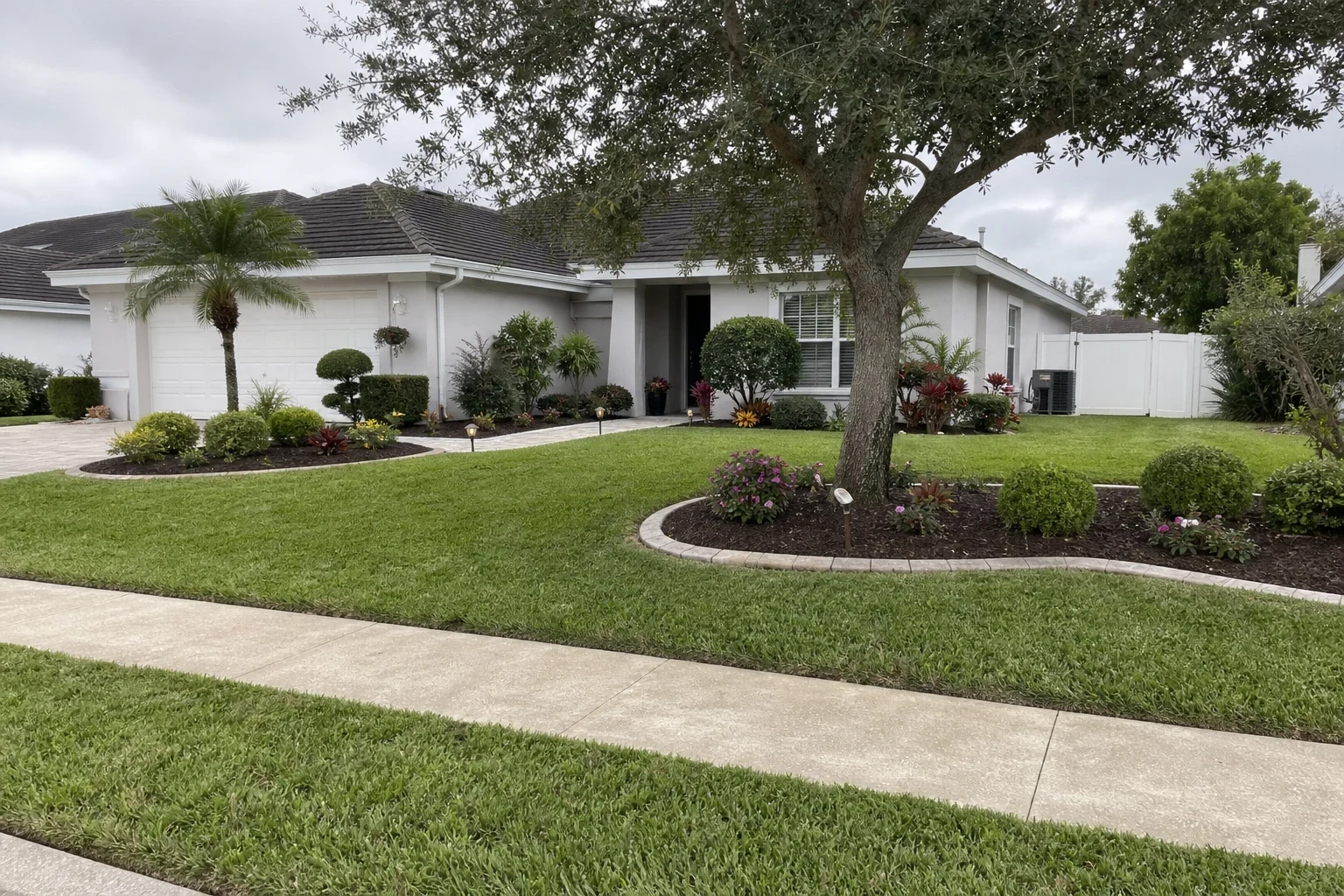
We'll come out, walk the yard with you and look at every palm. You'll get a free estimate and an honest take on what to trim, what to leave and what should come down.