ServicesMulch and Beds
Mulch and Bed Installation in Daytona Beach
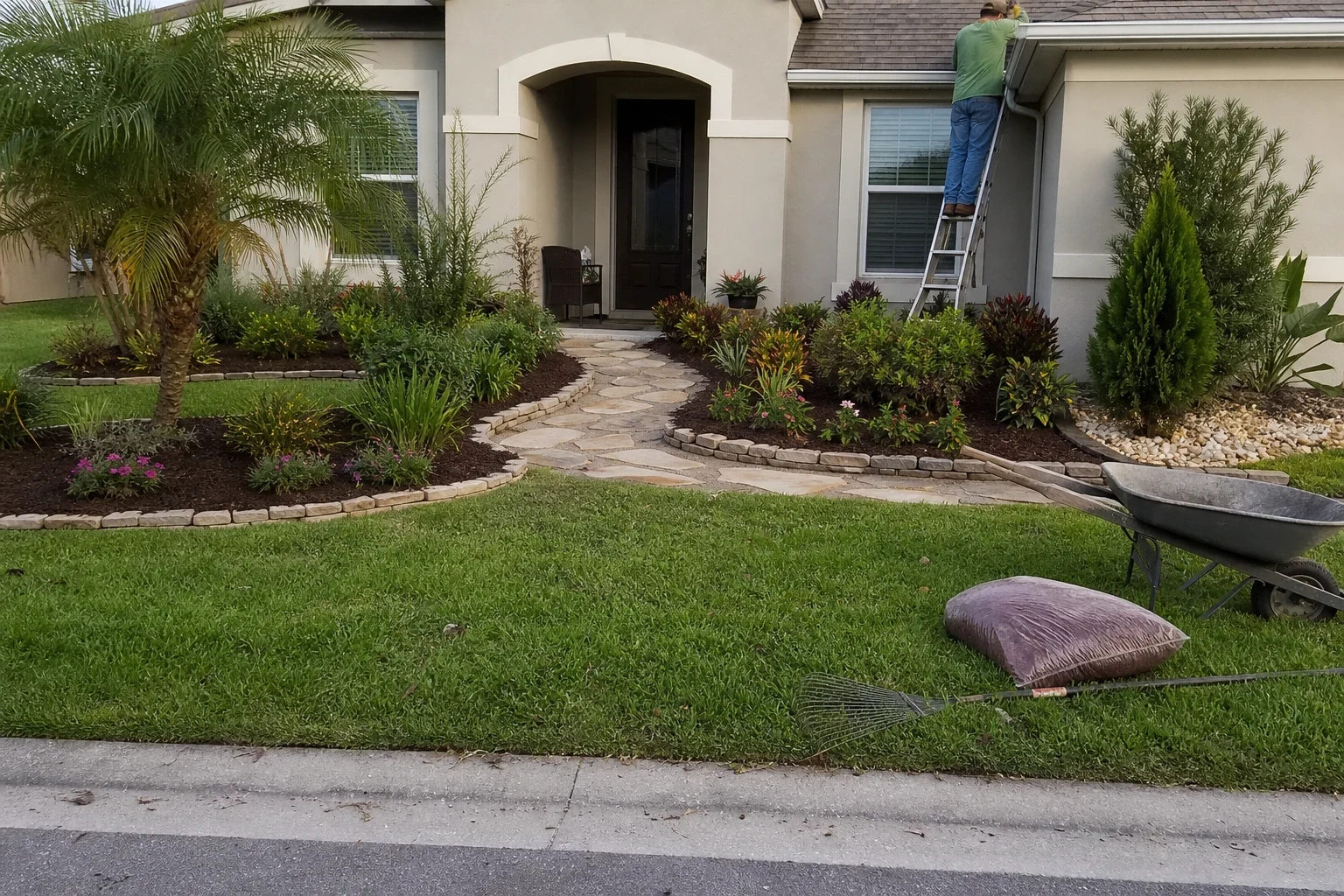
We clear out weeds, cut clean bed edges and lay fresh mulch at the right depth, kept back from trunks and your home's foundation. You get beds that hold their shape and hold moisture, and they stay tidy long after the first few weeks.
Fresh mulch lasts when the bed under it is right
Most tired beds don't need more mulch piled on top. They need the old layer checked, the weeds pulled at the root and an edge that keeps grass from creeping in. We do that groundwork first, because it decides whether new mulch looks good for a month or for a full season.
Sandy soil drains fast here, and summer storms push light material around, so we match the mulch to the spot. Pine bark nuggets work well in open beds. Pine straw knits together and stays put on slopes. Stone goes only where plants won't need the soil fed. We spread organic mulch two to three inches deep, enough to shade out weed seeds without smothering roots.
This service is a good fit when you want beds refreshed once or twice a year, or when new plantings need finishing. If you'd rather reshape or replant the beds from scratch, our Landscape Design work is the place to start.
What a mulch and bed job includes
- 01
Weeds out at the root
We hand-pull and dig out dollarweed, nutsedge and grass runners, roots included. Weeds buried under fresh mulch just push back through in a few weeks.
- 02
A clean, cut edge
We cut a crisp spade edge a few inches deep with a slight bevel, so mulch sits inside the bed and turf runners have a clear line to stop at. If you want a permanent border, we set edging and stake it firmly so it doesn't heave or drift.
- 03
Old mulch checked first
Years of topping up can leave a thick, matted layer that sheds water and keeps roots shallow. We rake it out or thin it before anything new goes down.
- 04
The right depth and the right gap
Mulch goes two to three inches deep across the bed, tapered thinner near plants and pulled back from trunks and stems. We also keep it below and away from siding and the slab edge, so it doesn't hold moisture against your home.
- 05
Soil and plant touch-ups
Where the sand is worn out, we work in compost before mulching. We can also replace a few failed shrubs and trim back plants spilling over the edge.
- 06
Sprinkler heads and drip lines
We raise or turn heads so the new layer doesn't block their spray, and tuck drip line neatly under the mulch. Larger zone problems go to our Irrigation service.
Questions about Mulch and Beds?
Call(407) 499-8402Signs your beds are due for work
Mulch has gone gray and thin
Strong sun bleaches mulch and breaks it down. Once bare soil shows through, weeds move in and the ground dries out faster.
Weeds are winning
If you're pulling the same weeds every weekend, the roots are still there and the cover is too thin to stop new seeds.
Grass is creeping into the bed
A lost edge lets runners crawl in from the lawn and blurs the shape of the bed.
Mulch piled against trunks or walls
Volcano-shaped mounds around trees trap moisture against the bark and invite rot. Mulch heaped against the house keeps the wall damp.
Mulch washes onto the walkway
After a heavy rain, mulch on the pavement usually means it's too light for the spot, laid too deep or missing an edge to hold it.
Old fabric poking through
Torn landscape fabric curling up at the surface often has weeds rooted right on top of it.
How a bed project goes
- 1
A walk around your beds
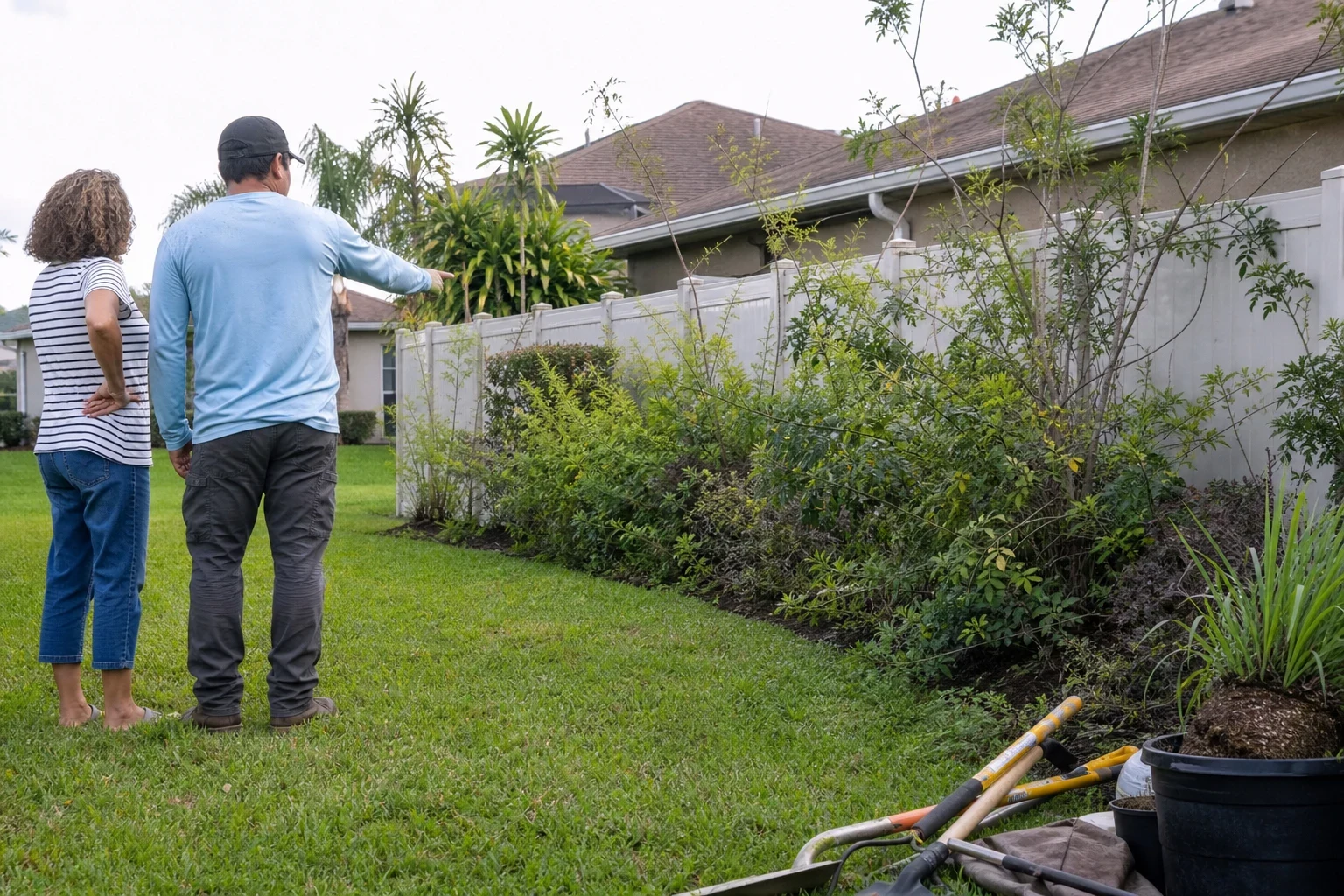
We come out, measure the beds and look at what's under the current mulch. We ask what you like and what bothers you, then give you a written estimate that lists the mulch type, the amount and any edging or plant work.
- 2
Protect and prep
On the day, we lay tarps on the driveway where the mulch is unloaded and flag sprinkler heads so nothing gets buried or broken.
- 3
Clean and edge
Weeds and roots come out, old mulch is thinned or removed, any failed fabric is pulled, and the edges are cut fresh.
- 4
Spread and finish
We spread mulch by hand, rake it even and check the depth as we go, pulling it back from stems and your foundation. Then we blow off walks and the driveway and walk the beds with you before we leave.
What sets the price of mulch and bed work
Every estimate is built from your own beds, not a flat rate. We measure first, then explain what drives the number so you can see where it goes and choose what to do now or later. If you're pairing bed work with a larger project, you can finance amounts as high as $100,000 over a term of two to twelve years, and paying it off early never costs you a penalty.
- Bed size and depth
- We measure the square footage and settle on how thick the new layer should be. Those two numbers tell us how much material to haul in.
- Material choice
- Pine bark, pine straw and stone each cost and wear differently. We'll tell you which one fits each bed and why.
- Condition of the bed
- Heavy weeds, thick old mulch or buried fabric to remove all add labor before any new mulch goes down.
- Edging and extras
- A cut edge is part of the job. Installed edging, compost or new plants are priced as separate lines.
- Access
- Backyard beds behind a narrow gate mean more trips by wheelbarrow than beds along the driveway.
Mulch and bed questions
How often should mulch be refreshed?
Organic mulch breaks down steadily in our heat, so most beds need a top-up about once a year, and sunny beds sometimes twice. A top-up is usually an inch or so, not a full new layer. If your current mulch is still deep enough, we'll tell you.
Should landscape fabric go under the mulch?
Under wood or pine straw, usually not. As the mulch breaks down, it becomes soil on top of the fabric and weeds root right into it, while the fabric keeps that organic matter from feeding the ground below. We may use it under stone, and we can pull out old fabric that's failing.
Is stone a better choice than wood mulch?
It depends on the bed. Stone doesn't need topping up, but it holds heat, is harder to clear of leaves and doesn't improve the soil. We like it for narrow strips without plants and use wood or pine straw where shrubs need to thrive.
Will fresh mulch draw termites to my home?
The bigger concern is moisture held against the foundation, which is why we leave a gap between mulch and your walls. If you have a pest control contract, check whether it asks for a set clearance, and we'll follow it.
How long does a bed job take?
A straightforward refresh on a typical yard is often finished in a single visit. Beds with deep-rooted weeds, matted old mulch or buried fabric take longer, since that cleanup comes before any new material. We'll give you a realistic idea of the timing when we write up your estimate.
Do I need to be home on the day?
Not necessarily. As long as gates are unlocked and pets are inside, we can work while you're out. We do like to walk the beds with you at the estimate so we know exactly what you want.
Let's take a look at your beds
Tell us what's bothering you about your beds, and we'll come out, measure and give you a free estimate with each part spelled out. You decide what to do and when.